Indonesian weekly apologizes over Last Supper Suharto cover
Summary
One of Indonesia’s top news weeklies, Tempo has apologized for the cover of its 4-10 February 2008 issue, which illustrated a picture of the late former president Suharto and his children in a masterpiece mimicking Leornardo da Vinci’s ‘Last Supper’.
The magazine edition themed “Setelah Dia Pergi” (After his departure) triggered a controversial protest among Christians and Catholics as the magazine cover portrayed the late Suharto taking Jesus Christ’s central place at the table surrounded by his three daughters and sons instead of apostles.
As soon as several Christian groups and other inter-religious organizations converged into the Tempo office to complain over the cover, page two of Koran Tempo, a daily published by the same outfit as the weekly, published a large headline over an apology read, “Tempo Magazine Apologizes” with a subheading: “We had no intention of hurting Christians”.
Following the incident, Tempo chief editor, Toriq Hadad said in the apology, “We had no intention of hurting Christians. We were only inspired by the composition of the Leonardo painting, and not in the concept or context of the event told in the Holy Bible”. Adding to that, Mr.Hadad was also quoted saying, “For anything unacceptable arising from the publishing of that cover, I, in the name of the Tempo institution, offer an apology”.
Summary
One of Indonesia’s top news weeklies, Tempo has apologized for the cover of its 4-10 February 2008 issue, which illustrated a picture of the late former president Suharto and his children in a masterpiece mimicking Leornardo da Vinci’s ‘Last Supper’.
The magazine edition themed “Setelah Dia Pergi” (After his departure) triggered a controversial protest among Christians and Catholics as the magazine cover portrayed the late Suharto taking Jesus Christ’s central place at the table surrounded by his three daughters and sons instead of apostles.
As soon as several Christian groups and other inter-religious organizations converged into the Tempo office to complain over the cover, page two of Koran Tempo, a daily published by the same outfit as the weekly, published a large headline over an apology read, “Tempo Magazine Apologizes” with a subheading: “We had no intention of hurting Christians”.
Following the incident, Tempo chief editor, Toriq Hadad said in the apology, “We had no intention of hurting Christians. We were only inspired by the composition of the Leonardo painting, and not in the concept or context of the event told in the Holy Bible”. Adding to that, Mr.Hadad was also quoted saying, “For anything unacceptable arising from the publishing of that cover, I, in the name of the Tempo institution, offer an apology”.

The Controversial Cover on Tempo
(Image taken from Google.Com)

Leonardo Da Vinci’s Original Painting: The: The Last Supper
(Image taken from Google.Com)
(Image taken from Google.Com)
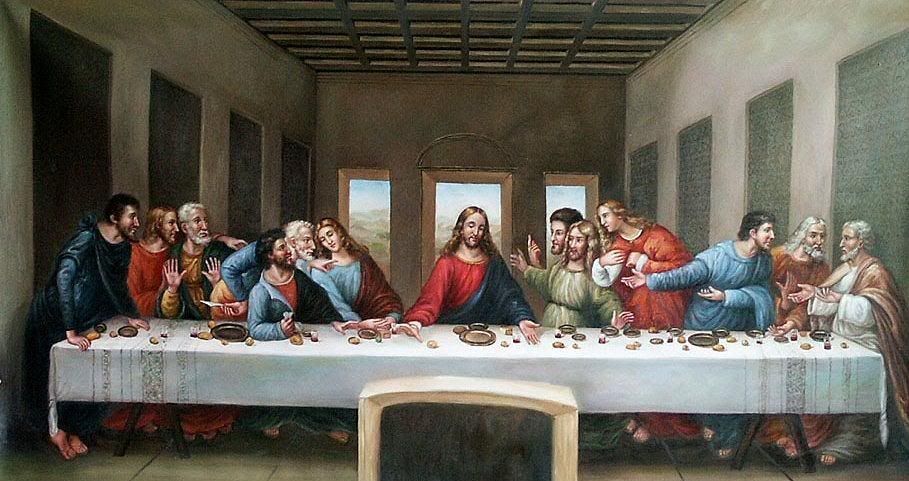
Leonardo Da Vinci’s Original Painting: The: The Last Supper
(Image taken from Google.Com)
Cultural Context
There is no doubt to why the Christians were unhappy with the picture of Suharto depicting Jesus Christ, their Lord and Savior. The picture created controversies due to cultural differences where misunderstanding of links between the compositions of Leonardo’s painting and the context of the event told in the Holy Bible were being questioned. According to Haynes, what exactly is considered blasphemy can vary between religious groups and people (Michael, 2007).
Ethical Publishing
It was certainly unethical to publish such a picture where cultural difference is not respected. As Feijter (2008, p.159) said, “The exploitation of religious themes or persons for the selling of products, superficiality and bad taste entertainment and the internationalization of ‘values of the secularized society’ are equally, negatively judged”. Weber’s (1995) statement that the right and ethical thing that should be considered by everyone is taking responsibility for one’s action proved Tempo chief editor to have ethics through his apology.
Personal Opinion
I believe that the illustration of Suharto mimicking Jesus Christ published by Tempo was definitely wrong and unethical. It violated the respects to cultural and religious differences among the people and they had a right to protest and complain.
References
Feijter, I 2008, ‘The Art of Dialogue: Religion, Communication and Global Media Culture’, LIT Verlag Berlin-Hamburg-Münster, viewed on 12 November 2008, http://books.google.com/books?id=gq2yJFu3EUAC&printsec=frontcover
There is no doubt to why the Christians were unhappy with the picture of Suharto depicting Jesus Christ, their Lord and Savior. The picture created controversies due to cultural differences where misunderstanding of links between the compositions of Leonardo’s painting and the context of the event told in the Holy Bible were being questioned. According to Haynes, what exactly is considered blasphemy can vary between religious groups and people (Michael, 2007).
Ethical Publishing
It was certainly unethical to publish such a picture where cultural difference is not respected. As Feijter (2008, p.159) said, “The exploitation of religious themes or persons for the selling of products, superficiality and bad taste entertainment and the internationalization of ‘values of the secularized society’ are equally, negatively judged”. Weber’s (1995) statement that the right and ethical thing that should be considered by everyone is taking responsibility for one’s action proved Tempo chief editor to have ethics through his apology.
Personal Opinion
I believe that the illustration of Suharto mimicking Jesus Christ published by Tempo was definitely wrong and unethical. It violated the respects to cultural and religious differences among the people and they had a right to protest and complain.
References
Feijter, I 2008, ‘The Art of Dialogue: Religion, Communication and Global Media Culture’, LIT Verlag Berlin-Hamburg-Münster, viewed on 12 November 2008, http://books.google.com/books?id=gq2yJFu3EUAC&printsec=frontcover
‘Indonesian weekly apologises over Last Supper Suharto cover’ 2008, ABC.net, viewed on 12 November 2008, http://www.abc.net.au/news/stories/2008/02/06/2156269.htm
Michael, M 2007, ‘Freedom of Religion Confronts Journalism’, BCHeights.Com, viewed on 12 November 2008, http://media.www.bcheights.com/media/storage/paper144/news/2007/03/26/News/Freedom.Of.Religion.Confronts.Journalism-2791570-page2.shtml
Weber, JH 1995, Ethics in scientific and technical communication, WISENET Journal 38, viewed on 12 November 2008, http://www.jeanweber.com/newsite/?page_id=22


No comments:
Post a Comment