Thursday, November 13, 2008

The Achievement


As I come to an end, I am very glad and proud to say, that I’m overjoyed that this is over. As mentioned at the beginning, I’ve never experience blogging. To be honest, it is because I am not tech-savvy neither IT literate.

However, publishing this weblog (with sleepless nights) has certainly taught me a lot (including a whole lot of patience). The process of creating a serious weblog may seem much more complicated compared to the production of other genre of blogs as it is vital to provide credible references and links for readers.

Some of the important elements that I gathered in the process of creating and maintaining a blog are:-

- Composition of the website – salience, framing and layout which provides readability and easy navigation (Kress & van Leeuwen, 2006) where main information is placed in the middle while related materials are linked and placed at the sidebar.


- Multimodality by Walsh (2006) encourages interactivity while engaging readers with the particular organization. Images are placed to provide visual aids to help readers better understand the related materials alongside proper hyperlinks (Nielson, 2000).


- Shriver (1997) has taught me the affordance of each mode that are being used by placing emphasis on their special functions to maximize their features.


Last but not least, I have learnt that blogging requires a huge amount of ethics as it determines the acceptance of the weblog among the public. Sensitive issues should be handled wisely to avoid misunderstandings. It is the bloggers responsibility to take appropriate measures n designing and writing for a blog.


Reference


Nielsen, J 2000, 'Chapter 3: Content design', Designing web usability, New Riders, Indianapolis.

Schriver, KA 1997, Dynamics in document design: creating texts for readers, Wiley Computer Pub., NY.

Walsh, M 2006, ‘Textual shift: Examining the reading process with print, visual and multimodal texts,’ Australian journal of language and literacy, vol. 29, no. 1, pp. 24-37

The Questionable Game

Summary

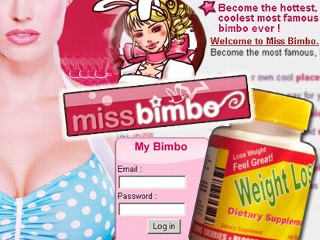
The article entitled "Parents concerned with Miss Bimbo game" posted on Telegraph.co.uk have certainly became a concern for parents with young daughters who are hooked in this new internet craze where young girls are given an online altered ego – virtual characters that they can perform plastic surgery and feed them diet pills. The aim of the game is to become “the coolest, richest and most famous bimbo in the whole world”.

They are given missions, including securing plastic surgery to give their “bimbo” bigger breasts and finding a filthy rich boyfriend to bankroll her, while keeping track on her hunger level, thirst, and happiness, just to name a few.

While the game’s creators claim it to be “harmless fun”, parents fear it will fuel teenagers’ desire for plastic surgery as well as leading to eating disorders.


Miss Bimbo Webpage
(Image by Google.Com)


Miss Bimbo Breast Implants and Diet Pills
(Image by Google.Com)


Miss Bimbo Virtual Character
(Image by Google.Com)


Personal Opinion

I believe that in this time and age, children are becoming even more vulnerable to the influences of the media. As Kress and van Leeuwen (1997) stated that texts and images convey meaning to a document. In this case however, the images portrayed by Miss Bimbo convey a negative meaning by making girls see these virtual dolls as the “perfect” definition to beauty.

In addition, this virtual game has concerned many parents as the dressing and manner of the virtual dolls are portrayed in a very unscrupulous conduct. This can be supported by what Shriver (1997) said, that images and texts are important so that people will be able to comprehend it.

To conclude, I do not think of this virtual game as “harmless fun” as it will be able to destroy the minds of young children that are growing up in the age of technological development. Just like the phrase “Monkey see, monkey do”, these visual graphics that young girls feed on will definitely play a part in shaping their future.

References

Kress, G & van Leeuwen, T 1997, Page to screen: taking literacy into the electronic era, “Chapter 3: Visual and verbal modes of representation in electronically mediated communication: the potentials new forms of text”, Allen & Unwin, New South Wales, pp.53-79.

'Parents concerned about Miss Bimbo game', 2008, Telegraph.co.uk, viewed on 13 November 2007, http://www.telegraph.co.uk/news/uknews/1582762/Parents-concerned-about-Miss-Bimbo-game.html

Shriver, KA 1997, Dynamics in document design: creating texts for readers, “Chapter 6: The interplay of words and pictures”, Wiley Computer Publication, New York, pp.364-441.Telegraph.co.uk 2008, “Parents concerned about Miss Bimbo game”, viewed on 13 November 2008, http://www.telegraph.co.uk/news/uknews/1582762/Parents-concerned-about-Miss-Bimbo-game.html

The Costly Song


Summary

The infamous ‘Negarakuku’ uproar in 2007, in light of celebrating malaysia’s 50th anniversary is no stranger especially to Malaysian citizens. In the article by Daniel Chandranayagam posted on GlobalVoicesAdvocacy entitled ‘Malaysia: YouTube rapper under investigation’, it discussed the controversy in which the song has brought. Police questioned Wee Meng Chee, aka Namewee, on the matter of his rap song which featured the Malaysian national anthem “Negaraku”, in the chorus.

The rap song with Chinese lyrics was believed to purportedly touch on police abuses, corruption and racial discrimination. According to Wee, the police questioned him on the song and his purpose for making the video which was being investigated under the Sedition Act. This subsequently led to the public apology made by Wee last year for the video that received more than million views.

The Controversial Video Clip
(YouTube.Com)

Wee was under severe criticism for mocking the national anthem and making offensive statements that may be labeled as ‘racial slurs’.


Personal Opinion

However, after watching the video for the first time, I perceived the video to be a true reflection of Malaysia’s current situation instead of looking at it as a mockery to the nation. As mentioned by Walsh (2006), understanding the cultural and social contexts contributes to making meaning out of a given text. She also added that we link what we witness to previous experiences to ‘fill the gaps’ in better comprehending a given text (Walsh, 2006, p.113). Therefore, it can be said that Wee’s controversial video can only be truly understood and comprehended by a person who is familiar with the Malaysia political scene of rampant bribery, racial inequality and so on.


References

Chandranayagam, D 2008, ‘Malaysia: YouTube rapper under investigation’, GlobalVoicesAdvocacy, viewed on 12 November 2008, http://advocacy.globalvoicesonline.org/2008/09/23/malaysia-youtube-rapper-under-investigations/

‘Negarakuku’ 2007, YouTube.Com, viewed on 12 November 2008, http://www.youtube.com/watch?v=tF7fbQdBoYw

Walsh, M 2006, ‘”Textual shift”: examining the reading process with print, visual and multimodal texts’, Australian Journal of Language and Literacy, vol. 29, no. 1, pp. 24-37

The Controversial Print

Indonesian weekly apologizes over Last Supper Suharto cover

Summary


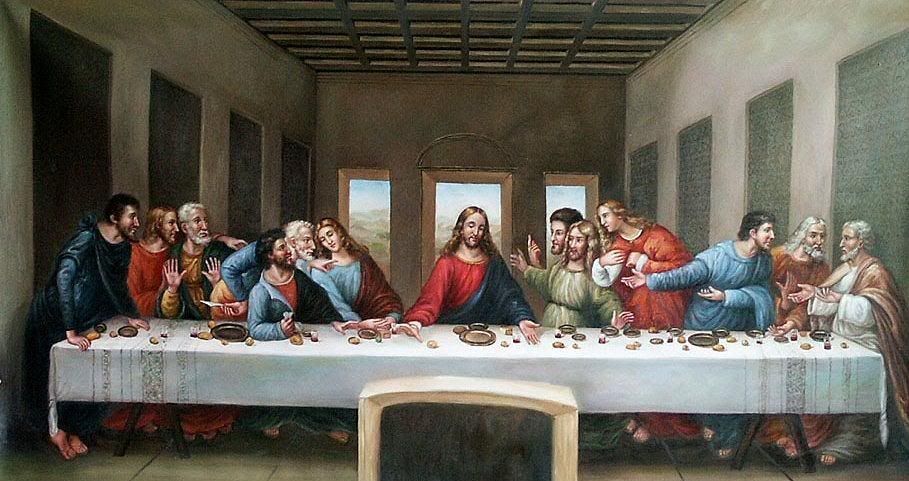
One of Indonesia’s top news weeklies, Tempo has apologized for the cover of its 4-10 February 2008 issue, which illustrated a picture of the late former president Suharto and his children in a masterpiece mimicking Leornardo da Vinci’s ‘Last Supper’.

The magazine edition themed “Setelah Dia Pergi” (After his departure) triggered a controversial protest among Christians and Catholics as the magazine cover portrayed the late Suharto taking Jesus Christ’s central place at the table surrounded by his three daughters and sons instead of apostles.

As soon as several Christian groups and other inter-religious organizations converged into the Tempo office to complain over the cover, page two of Koran Tempo, a daily published by the same outfit as the weekly, published a large headline over an apology read, “Tempo Magazine Apologizes” with a subheading: “We had no intention of hurting Christians”.

Following the incident, Tempo chief editor, Toriq Hadad said in the apology, “We had no intention of hurting Christians. We were only inspired by the composition of the Leonardo painting, and not in the concept or context of the event told in the Holy Bible”. Adding to that, Mr.Hadad was also quoted saying, “For anything unacceptable arising from the publishing of that cover, I, in the name of the Tempo institution, offer an apology”.


The Controversial Cover on Tempo
(Image taken from Google.Com)


Leonardo Da Vinci’s Original Painting: The: The Last Supper
(Image taken from Google.Com)


Cultural Context

There is no doubt to why the Christians were unhappy with the picture of Suharto depicting Jesus Christ, their Lord and Savior. The picture created controversies due to cultural differences where misunderstanding of links between the compositions of Leonardo’s painting and the context of the event told in the Holy Bible were being questioned. According to Haynes, what exactly is considered blasphemy can vary between religious groups and people (Michael, 2007).


Ethical Publishing


It was certainly unethical to publish such a picture where cultural difference is not respected. As Feijter (2008, p.159) said, “The exploitation of religious themes or persons for the selling of products, superficiality and bad taste entertainment and the internationalization of ‘values of the secularized society’ are equally, negatively judged”. Weber’s (1995) statement that the right and ethical thing that should be considered by everyone is taking responsibility for one’s action proved Tempo chief editor to have ethics through his apology.


Personal Opinion

I believe that the illustration of Suharto mimicking Jesus Christ published by Tempo was definitely wrong and unethical. It violated the respects to cultural and religious differences among the people and they had a right to protest and complain.


References

Feijter, I 2008, ‘The Art of Dialogue: Religion, Communication and Global Media Culture’, LIT Verlag Berlin-Hamburg-Münster, viewed on 12 November 2008, http://books.google.com/books?id=gq2yJFu3EUAC&printsec=frontcover


‘Indonesian weekly apologises over Last Supper Suharto cover’ 2008, ABC.net, viewed on 12 November 2008, http://www.abc.net.au/news/stories/2008/02/06/2156269.htm


Michael, M 2007, ‘Freedom of Religion Confronts Journalism’, BCHeights.Com, viewed on 12 November 2008, http://media.www.bcheights.com/media/storage/paper144/news/2007/03/26/News/Freedom.Of.Religion.Confronts.Journalism-2791570-page2.shtml

Weber, JH 1995, Ethics in scientific and technical communication, WISENET Journal 38, viewed on 12 November 2008, http://www.jeanweber.com/newsite/?page_id=22

Emoticons and Email Etiquette

Emoticons

Everyday, people around the world send out millions of emails and text messages. There has never been a period n history where so much correspondence is involved. It is a fact that people have no idea how to write neither do they have any idea how to interpret because an innocent email sent can result in many different interpretations – enthusiastic and sneering.

The inability of people to interpret their true feelings and emotions has resulted in the creation of the emoticons as there are too few cues in email communication. A transcript in TheMediaReport (2007) showed the discussion presented by Antony Funnell relating to this issue.


Summary

American professor Scott Fahlman from Carnegie Mellon University invented the original emoticon made up of typing a colon, a hyphen and a parenthesis on 19th September 1982 as a result of the inability of some people (his students) to accurately interpret emotions or intentions of email.


(Example of the Original Emoticon)

In this modern age, software has turned these graphics into fairly ugly yellow things, combined with animation. However, a lot of mail still maintains the original characters as they dare not mess with the emoticons that have already been established and understood worldwide. Agreeing to this, Schirato & Yell (1996, p.109) said that ‘ for any text to be recognizable and readable it must draw upon already established and shared set of meaning’.


(Example of current Emoticon graphics)


Email Etiquette

Similarly, the discussion presented by Antony Funnell stated that email is a symbol of the way we treat each other where it reflects the kind of person we are in reality. Email etiquette can be categorized into two parts, formality (the way we address a person in the email) and the occasion (it should not be used to express feelings, especially in sending out an apology).

Few good email etiquette include:-

- Not writing in CAPITALS
- Be concise to the point
- Avoid using URGENT and IMPORTANT
- Keeping your language gender neutral
- Not forwarding virus hoaxes and chain letters

Bad email etiquette include:-

- Bacn – ‘email you want but not right now’. It differs from spam as recipient has somehow signed up to receive it.


Personal Opinion

To conclude, I believe that the genius creation of emoticons used to interpret emotions has played a vital part in the everyday life of urban youths. It has become a natural habit for people to insert emoticons into their emails and text messages. However, emoticons should not be overused to express feeling as face to face communication is always the better option. Similarly, emails should always be personal and good email etiquette ought to be practiced among all email users as generation Y has grew up in the world of texting, instant messaging, emailing and social networking. It has therefore, produced a highly literate generation that knows how to type, spell and use grammar.


References

‘Emoticons and email etiquette’ 2007, TheMediaReport, ABC.Net.Au, viewed on 12 November 2008, http://www.abc.net.au/rn/mediareport/stories/2007/2064342.htm

Schirato, T & Yell, S 1996, Communication and cultural literacy: an introduction, Allen & Unwin, NSW, pp. 90-117

New Forms of Media Publishing

The advancement of technology in today’s world has given way to new forms of publishing in the online world. Some of the new forms of blogs include (Wikipedia.Org, 2007):

- Vlog
- Linklog
- Sketchblog
- Photoblog
- Tumblelogs

Some of these blogs focus on particular issues such as (Wilipedia.Org, 2007):

- Political blogs
- Travel blogs
- Fashion blogs
- Project blogs
- Project blogs niche blogs
- Dreamlogs


According to Walsh (2006, p.24), the occurrence of Vlogs and Moblogs can be seen as multimodality which is the incorporation of ‘spoken or written language’. Youtube, for instance, can be incorporated to these new forms of media – Vlogs (Wikipedia.Org, 2008) where copyright infringement have become prevalent in it. People can post clips from movies or song clips without having any legal authorization.

(YouTube.Com)


In Malaysia, this new form of media broadcast has provided a platform for freedom of expression to the public which otherwise would not be allowed in mainstream media. However, this liberty given should not be misused by Malaysians as there are certain ethics that they should practice. Webber (1995) argued that although there are areas that require telling truth, misinterpreting information on purpose in down right wrong. Therefore, the public should not take advantage of this freedom given by these new media.

This is an example of a video posted on YouTube.Com by Aljazeera on the protest made by the Hindu Rights Action Force (HINDRAF) prior to the general elections in 8 March 2008.


Besides new forms of blogs, other new forms of media publishing can be seen through the available online sites of print newspapers, magazines and books.


References

‘Blog Types’ 2007, Wikipedia.Org, viewed on 12 November 2008, http://en.wikipedia.org/wiki/Blogs

'Ethnic Indians protest in Malaysia – 16 Feb 08', video recording, YouTube.Com, viewed on 12 November 2008, http://www.youtube.com/watch?v=Fk4MwT92rLE.

Walsh, M 2006, The ‘textual shift’: Examining the reading process with print, visual and multimodal texts, Australian Journal of Language and Literacy, vol. 29, no. 1, pp. 24-37.

Weber, JH 1995, Ethics in scientific and technical communication, WISENET Journal 38, viewed on 12 November 2008, http://www.jeanweber.com/about/ethics.htm

Print Designing vs. Online Designing

Designing for print and designing for web is as different as black and white. Designing for web is based in accordance to the audience, purpose and context. These guidelines should be made as a priority to create good document design that not only attract readers but also engage readers to get involved with the organization itself (Walsh, 2006). Online media (websites, weblogs, e-browse) and print media (fact sheets, magazines, newspapers) alter different design layouts to accommodate their own purpose and space.

Print media asserts a linear and sequential way reading pathway as readers do not have a choice but to read it in order (Walsh, 2006), that is, from left to right (Kress & van Leeuwen, 2006). Therefore, sub-headings and typography would help reflect and develop the meaning of words as mentioned by Putnis & Petelin (1996), that “optimum legibility for paper documents as the product of the relationship between the style of the letter form (the typeface or font), the size of the letters, the length of the line and the amount of white space between the lines”.


(Example of Print Media – Seventeen Magazine)

On the other hand, designing for web provides a non-linear reading pathway which allows readers freedom to choose and encourage interactivity (Walsh, 2006) through external links to other websites. As Nielson (2006) explains, web page users read ‘in a horizontal movement… Next, users move down the page a bit and then read across in a second horizontal movement… Finally, users scan the content’s left side in a vertical movement’ – the F-pattern. Therefore, when designing for web, contents should not be overpowered with information as Nielson (1997) said that


‘People rarely read web pages word by word while reading from the computer screen is about 25% slower compares to reading from print’.


(Example of Web Layout – Seventeen Magazine)


References

Kress, G & van Leeuwen, T 2006, Reading Images: Grammar of Visual Design, Routledge, London.

Nielsen, J 2006, ‘F-Shaped Pattern For Reading Web Content’, Useit.com, viewed on 12 November 2008, < http://www.useit.com/alertbox/reading_pattern.html>.

Nielsen, J 1997, ‘Be Succinct! (Writing for the Web’), Useit.com, viewed 12 November 2008, <http://www.useit.com/alertbox/9703b.html>.

Nielsen, J 1997, How Users Read on the Web, Useit.com, viewed 12 November 2008, < http://www.useit.com/alertbox/9710a.html>.

Putnis, P & Petelin, R 1996, Professional communication: principles and applications, Prentice Hall, Sydney.

Walsh, M 2006, The ‘textual shift’: Examining the reading process with print, visual and multimodal texts, Australian Journal of Language and Literacy, vol. 29, no. 1, pp. 24-37.

The Classification of Blogs and It’s Community

Classification of Blogs
Blogs, like many other things on the World Wide Web, are multifaceted. The types of blogs vary and are distinctive as the people who decide to publish them. According to Wikipedia.Org (2008), there are namely 6 types of blogs:

1. Personal Blogs
2. Corporate Blogs
3. Question Blogging
4. By Media Type
5. By Device
6. By Genre

On the other hand, Australian media analyst Margeret Simons, in a transcript interview with ABC.Net.Au (2008) listed 9 types of online websites that she classifies as blogs: —

1. Pamphleteering Blog
2. Digest Blog
3. Advocacy Blog
4. Popular Mechanics Blog
5. Exhibition Blog
6. Gatewatcher Blog
7. Diary Blog8. Advertisement Blog
9. News Blog

The difference between how Wikipedia.Org and Simons classify blogs is very different. As Wikipedia.Org (2008) classifies blogs in terms of its content and how it is translated to the audience, Simons (2008) classifies these online websites as blogs only by the content it provides in the Australian context. Personally, I prefer the classification made by Wikipedia.Org as it is easier to identify compared to Simons’ Australian based classification.


The Blogging Community
It is not a surprise for people with similar interests to form a union. Likewise, an online or virtual community (blogging community) can be classified as a group of people wth common interest and practices who communicate…in an organized way using the Internet… through a common location or mechanism (Averweg & Leaning, 2007).

As there are many book clubs so are there many blogging communities. According to White (2006), there are three specific types of blogging communities:-

1. Single Blog/Blogger Centric Community –
Community that occurs around the primary blogger

2. Central Connecting Topic Community –
Community that develops from common passion and interest

3. Boundaried Community –
Community that gathers by registered members of a specific organization

I will be long into the Boundaried Community, where it connects various blogs and bloggers to other bloggers. To name a few Boundaried Community on the Internet, there are MyBlogLog, BlogCatalog and BeanRocket Blogging.

MyBlogLog ‘enables readers of web pages to leave information about themselves, building a social network among fans of such things as… MySpace pages, commercial Web publications, or personal blogs’ (Hardy 2007).


I would create a blogging community via my blog by providing a chat box and numerous links to other credible blogs on the sidebar.


References

Averweg, UR & Leaning, M 2007, Are ‘Virtual Communities’ Virtual?, The Southern Africa Institute of Management Services, viewed on 12 November 2008,
<http://www.mtmassociation.org.za/Are%20Virtual%20Communities%20Virtual.pdf>

‘A taxonomy of blogs’ 2008, ABC.Net.Au, viewed on 12 November 2008, <http://www.abc.net.au/rn/mediareport/stories/2008/2372882.htm#transcript>

‘Blog’ 2008, Wikipedia.Org, viewed on 12 November 2008, <http://en.wikipedia.org/wiki/Blogs>

Hardy, Q 2007, ‘Yahoo! Snaps Up Mybloglog.com’, Forbes.com, viewed on 12 November 2008, < <http://www.forbes.com/markets/commodities/2007/01/09/yahoo-mybloglog-web-tech-media-cx_0109ces-blog.html>.

White, N 2006, ‘Blogs and Community – launching a new paradigm for online community?’, The Knowledge Tree, edn 11, viewed on 12 November 2008, <http://kt.flexiblelearning.net.au/tkt2006/edition-11-editorial/blogs-and-community-%E2%80%93-launching-a-new-paradigm-for-online-community>